Why Your SaaS Product Needs an Explainer Video?
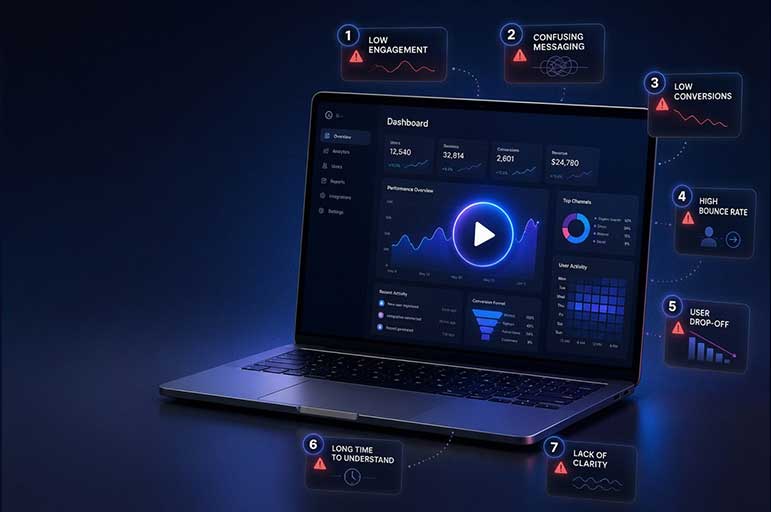
Here's a scenario I see constantly: a founder builds genuinely great software, solves a real problem, and then watches visitors bounce off the homepage in under ten seconds — not because the product is weak, but because nobody could figure out what it actually does fast enough to care.
That's not a product problem. That's a communication problem. And in B2B SaaS, where attention spans are short and buyers are comparing five tabs at once, communication is the product until someone books a demo.
This is exactly why SaaS explainer videos have quietly become one of the highest-leverage assets a software company can invest in. Not because video is trendy, but because it does something a features page can't: it turns "what is this and why should I care" into a 60-second answer.
Let me walk you through why this works, what actually makes a good one, and how I approach building them for clients.
Software Is Invisible — And That's the Real Challenge
Physical products sell themselves a little, just by existing. You can hold them, see them, imagine using them. Software doesn't give you that shortcut. A prospect looking at your dashboard for the first time has no context for how it fits into their actual workday.
Most SaaS websites respond to this by throwing more information at the visitor — feature grids, integration logos, technical documentation, pricing tiers. All useful eventually, but none of it answers the one question every buyer is silently asking in the first five seconds:
"How does this make my work easier?"
An explainer video answers that question immediately, without asking the viewer to read a paragraph or click into three sub-pages. It shows the problem, shows your product solving it, and lets the viewer picture themselves using it — all before they've had time to get bored.
What a SaaS Explainer Video Actually Is
I want to be clear about this because the term gets used loosely. A SaaS explainer isn't a screen recording with a voiceover slapped on top. A professional one blends several disciplines into a single, tight narrative:
- A script built around the customer's problem, not your feature list
- Animated UI sequences that highlight the right interactions, not everything
- Motion graphics that guide the eye instead of just decorating the screen
- Professional voice-over that sets tone and pace
- Music and sound design that make the whole thing feel intentional
- A clear call to action at the end — because a beautiful video that doesn't ask for anything wastes its own momentum
Done well, this video can live almost anywhere: your homepage, a landing page, a LinkedIn campaign, an email sequence, a Product Hunt launch, an investor deck, even the first slide of a sales call.
What It Actually Does for Your Business
It simplifies without dumbing down. Most SaaS platforms have far more functionality than a first-time visitor needs to see. A good explainer resists the urge to show everything and instead walks through one clear workflow — the one that makes the value obvious fastest.
It keeps people on the page longer. Video holds attention in a way that paragraphs of feature copy simply don't. A visitor who watches 60 seconds of a well-made explainer is far more likely to keep exploring than one who bailed halfway through your "Why Us" section.
It makes your sales team's job easier. I've had clients tell me their reps stopped spending the first ten minutes of every call re-explaining the basics — because prospects had already watched the explainer and showed up understanding the product. That's ten minutes back for an actual conversation about their specific needs.
It gives launches momentum. A new feature or platform update lands very differently when people can see it working instead of reading about it in a changelog. This is especially true for Product Hunt drops, email announcements, and investor updates, where a launch video creates energy a bullet list can't.
It keeps paying you back long after delivery. A single well-planned explainer becomes raw material for months of content — cut down into LinkedIn ads, YouTube Shorts, trade show loops, onboarding clips, and website hero videos. One production, many campaigns.
Not All SaaS Videos Are the Same Video
Different goals call for different formats, and this is where a lot of companies waste budget — commissioning one video and expecting it to do a job it wasn't built for.
- Explainer videos lead with the customer's problem before introducing your product as the solution. Built for cold or early-stage prospects who don't know you yet.
- Product demo videos walk through the software itself, using animated cursors, callouts, and interface zooms to make a workflow easy to follow instead of just recorded.
- UI animation puts your interface itself in the spotlight — ideal if a clean, powerful dashboard is one of your strongest selling points.
- Feature announcement videos show what's new in a way a changelog post never will, perfect for release notes, newsletters, and social.
- Onboarding videos reduce the "now what?" moment new users hit right after signing up, cutting support tickets and improving activation.
Knowing which one you actually need — before production starts — is half the strategy.
What Separates a Good Explainer From a Forgettable One
I've made enough of these to know the difference usually comes down to a handful of decisions made before anyone opens After Effects:
A real story, not a feature dump. People remember a problem-to-solution arc. They don't remember a list. The strongest explainers open with a challenge the viewer recognizes from their own workday, then resolve it with your product.
Messaging built around outcomes, not architecture. Nobody outside your engineering team cares about your tech stack on a first watch. They care whether your product saves them time, removes manual work, or makes their team look good.
Animation that has a job to do. Every zoom, highlight, and transition should be pointing at something the viewer needs to understand — never motion for the sake of looking busy.
Voice-over that sets the right tone. A confident, conversational narrator makes even genuinely complex software feel approachable, and it does more for perceived credibility than people expect.
A call to action that isn't an afterthought. Book a demo. Start a free trial. Talk to sales. Whatever the next step is, the video should ask for it directly — not fade out and hope the viewer figures it out themselves.
How I Approach a SaaS Explainer Project
Every project starts the same way: a real conversation about your product, your audience, and what "success" looks like for this specific video — not a generic template.
From there, it moves through scripting (built around your product and messaging, whether you're starting from a draft or a blank page), storyboarding so everyone agrees on direction before animation begins, and then design and animation using your actual brand guidelines and interface. You'll see review versions along the way, not just a final surprise. Delivery typically includes multiple aspect ratios and formats so the same production can work across your website, socials, and sales decks.
Why Work With a Freelance SaaS Motion Designer Instead of an Agency
There's a reason more SaaS founders are choosing to work directly with a specialized freelancer instead of routing everything through an agency with three layers of account managers.
Communication is faster because you're talking directly to the person actually animating your product — not relaying feedback through a middleman. Revisions move quicker, ideas get tested faster, and the person making creative decisions actually understands your software by the second call, not the fifth.
Industries I Work With
I build explainer and demo videos for software companies across AI, cybersecurity, fintech, healthtech, edtech, HR tools, CRM platforms, project management software, marketing automation, data analytics, cloud computing, and productivity and communication platforms. Every industry talks to its buyers differently, and every video is built to match that — not recycled from a template.
Your Software Deserves to Be Understood in Seconds, Not Minutes
If people can't understand what your product does within the first few seconds of landing on your site, you're losing demos you never even see in your analytics. A well-built explainer video fixes that — not by dumbing your product down, but by giving prospects the fastest possible path to "oh, I get it, I need this."
I'm Abul, and at Azad Motion Studio I help SaaS companies turn complex software into clear, engaging video that actually moves people toward a demo. If you're planning a launch, refreshing your homepage, or just tired of watching visitors bounce before they understand what you've built, let's talk about your product, your audience, and what a great explainer could do for your pipeline.
Ready to turn your software into a story that sells? Get in touch with Azad Motion Studio to start the conversation.